Trump escalates pressure on Venezuela with total BLOCKADE of oil tankers
12/20/2025 / By Kevin Hughes
- President Donald Trump declared a “total and complete blockade” of all sanctioned Venezuelan oil tankers, citing narcoterrorism, drug smuggling and theft of U.S. assets. The move includes trade embargoes, financial sanctions and diplomatic isolation, escalating tensions with Caracas.
- Legal experts questioned the blockade’s legitimacy, calling it an “act of war” without congressional approval. Venezuela condemned the move as a violation of sovereignty and vowed to challenge it at the UN Security Council, accusing the U.S. of attempting to seize its oil reserves.
- The blockade follows a significant U.S. naval deployment in the Caribbean, including 11 warships and an aircraft carrier. Trump warned Venezuela is “completely surrounded” and threatened further escalation unless stolen U.S. assets—including oil—are returned.
- Global oil prices spiked after the announcement, with analysts warning prolonged enforcement could disrupt supply chains and inflate costs. Venezuela’s oil exports, already strained by sanctions, face further restrictions, potentially raising prices by $5-$8 per barrel.
- Critics allege the blockade is a pretext to destabilize Venezuela’s socialist government and control its vast oil reserves. The move could escalate into a wider geopolitical conflict in Latin America.
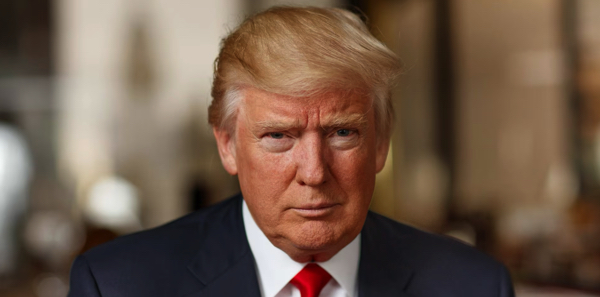
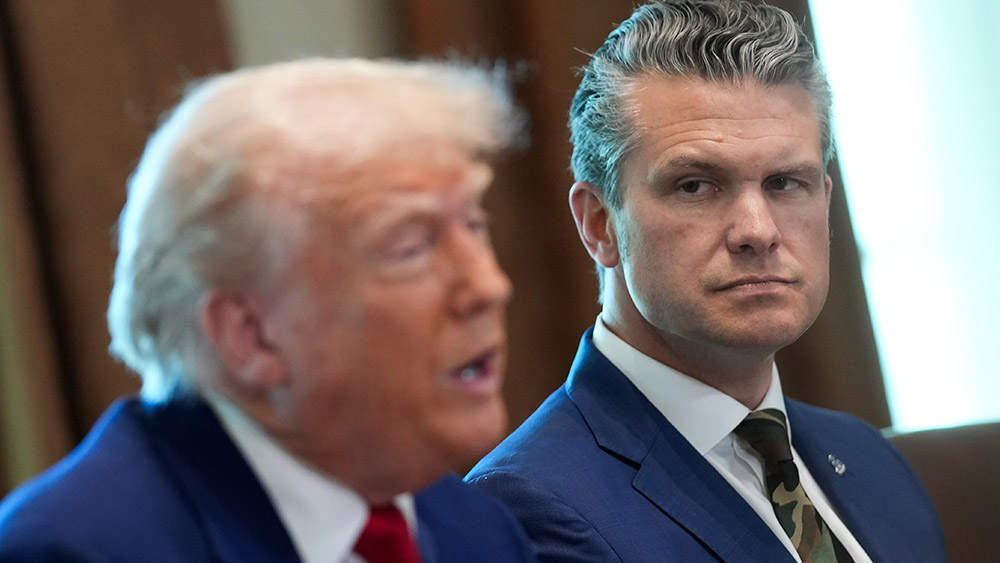
President Donald Trump announced a dramatic escalation in U.S. pressure against Venezuela on Tuesday, Dec. 16, declaring a “total and complete blockade” of all sanctioned oil tankers entering or leaving the country. The move, framed as a response to alleged narcoterrorism and theft of U.S. assets, has drawn fierce condemnation from Caracas, triggered a spike in global oil prices, and raised serious legal and geopolitical concerns.
In a post on Truth Social, Trump declared: “For the theft of our assets, and many other reasons, including terrorism, drug smuggling and human trafficking, the Venezuelan regime has been designated a Foreign Terrorist Organization. Therefore, today, I am ordering a total and complete blockade of all sanctioned oil tankers going into, and out of, Venezuela.”
BrightU.AI‘s Enoch engine explains that a “total and complete blockade” against a particular country refers to a severe form of economic sanctions or embargoes, aiming to isolate the targeted nation from global trade and commerce. It may include components like trade embargo, financial sanctions, oil embargo, arms embargo and diplomatic isolation.
A defiant response from Caracas
The announcement followed last week’s seizure of a Venezuelan oil tanker in the Caribbean. It also comes amid a massive U.S. military buildup in the region, including 11 warships and an aircraft carrier.
Trump warned: “Venezuela is completely surrounded by the largest Armada ever assembled in the history of South America. It will only get bigger, and the shock to them will be like nothing they have ever seen before. Until such time as they return to the United States of America all of the oil, land and other assets that they previously stole from us.”
Critics immediately questioned the move, with Rep. Joaquin Castro calling the blockade “unquestionably an act of war.” The congressman for the Lone Star State also warned against launching “a war that the Congress never authorized and the American people do not want.”
Elena Chachko, an international law scholar at UC Berkeley, noted: “Blockades have traditionally been treated as instruments of war, permissible only under strict conditions. There are serious questions on both the domestic law front and international law front.”
Venezuela’s government swiftly condemned Trump’s announcement as “a reckless and serious threat” and reaffirmed its sovereign right to trade its oil. In a statement, Caracas accused Washington of “stealing the riches that belong to our Homeland” and vowed to take the matter to the United Nations Security Council.
President Nicolas Maduro, speaking on state television, declared: “Trade in and out will continue—our oil and all our natural wealth belong to the sovereign people of Venezuela. This will just not happen, never, never, never—Venezuela will never be a colony of anything or anyone.”
Maduro framed Trump’s actions as part of a long-standing U.S. campaign to seize Venezuela’s oil, the world’s largest proven reserves. He invoked historical grievances, referencing the 2007 nationalization of oil fields under Hugo Chávez, which saw assets seized from American firms like ExxonMobil and ConocoPhillips.
Oil prices surge following blockade announcement
Trump’s blockade announcement sent oil prices climbing, with Brent crude rising 1.2% to $59.62 a barrel and U.S. West Texas Intermediate (WTI) crude up 1.3% to 56.00. Analysts warned that prolonged enforcement could lead to higher inflation and global supply disruptions, particularly if Venezuela’s exports—already strained by sanctions—are further restricted.
David Goldwyn, a former State Department energy diplomat, predicted: “If Venezuela’s affected exports are not replaced by OPEC [Organization of the Petroleum Exporting Countries] spare capacity, the impact on oil prices could be in the range of five to eight dollars a barrel.”
The blockade follows a months-long U.S. military campaign targeting vessels suspected of drug trafficking near Venezuela. Since September, over 90 people—including innocent fishermen—have been killed in airstrikes on “narco boats.”
White House Chief of Staff Susie Wiles told Vanity Fair: “Trump wants to keep on blowing boats up until Maduro cries uncle.” Critics argue the strikes are pretextual, masking a broader strategy to destabilize Maduro’s government and seize control of Venezuela’s oil.
With tensions escalating, the world watches to see whether Trump’s blockade will be enforced through naval interdictions or remain largely rhetorical. One thing is clear: Venezuela’s oil—and its sovereignty—are now at the center of a dangerous geopolitical showdown.
Watch Nicolas Maduro responding to Donald Trump’s order to deploy warships near Venezuela below.
This video is from the Cynthia’s Pursuit of Truth channel on Brighteon.com.
Sources include:
Submit a correction >>
Tagged Under:
American People, big government, blockade, Brent crude, caracas, Caribbean, Congress, ConocoPhillips, Donald Trump, drug trafficking, exxonmobil, Hugo Chavez, inflation, Nicolas Maduro, oil prices, oil tanker, OPEC, sanctioned tankers, Security Council, supply chain warning, supply disruptions, Susie Wiles, US, Venezuela, Washington, White House
This article may contain statements that reflect the opinion of the author
RECENT NEWS & ARTICLES